DIAMONDS AND DUST: ON HEALTH GRIEF, MORTALITY AND THE ART OF PARTICIPATING IN LIFE
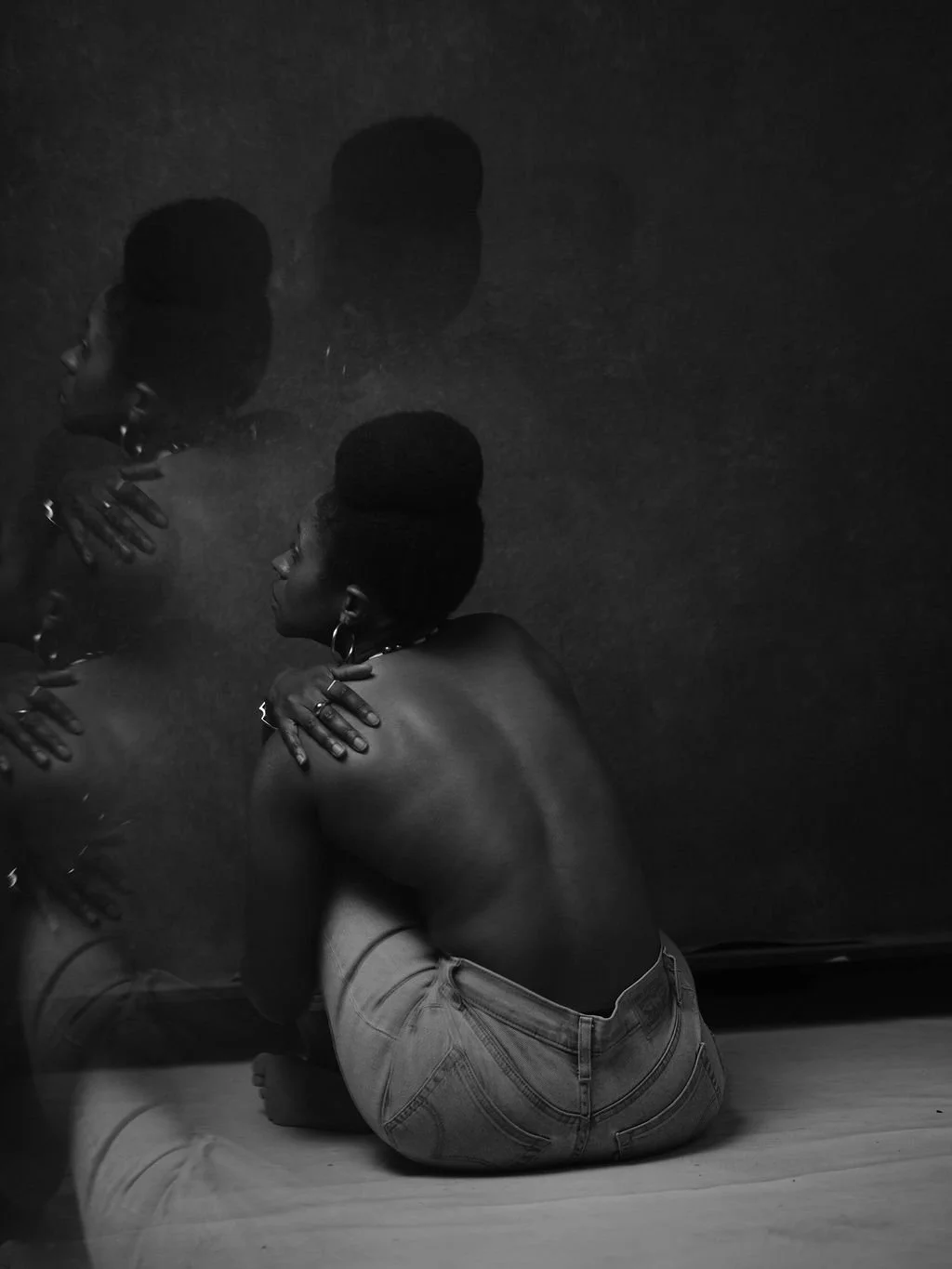
ESSAY SUMMARY
Diamonds and Dust begins with breast cancer, but its deeper subject is what happens when illness interrupts the story we thought we were living. The essay explores health grief: the losses that can accompany illness even when life continues outwardly as normal — certainty, bodily trust, identity, ease, imagined futures and the unconscious assumption that tomorrow will resemble today. It asks what happens when the body can no longer remain background, when mortality moves from an abstract fact into lived experience, and when recovery cannot simply mean returning to who we were before.
From there, the essay turns towards the question of participation. Rather than treating mortality as an argument for urgency, achievement or making every second count, it asks something quieter: How fully can we inhabit the life that is already here? It considers the difference between being alive, surviving and participating; the relationship between rest and endurance; the limits of narratives that demand transformation from suffering; and the possibility of post-traumatic integration — making room for what has happened without allowing it to become the whole story.
Running beneath all of this is a larger enquiry into how illness changes our relationship with time, care, vulnerability, love and the conditions within which healing actually takes place. Diamonds and Dust is ultimately less interested in making illness meaningful than in asking how we continue living truthfully after certainty has been disturbed.
“I stopped looking at my diagnosis as a death sentence and began viewing it as a life sentence.”
EXCERPT 1
Health is not merely the absence of illness, but a way of inhabiting the world without constantly bargaining with your body.
It is making plans six months from now without wondering what your care team will say.
It is booking a holiday without first checking treatment dates.
It is trusting that tomorrow will resemble today.
We rarely notice this freedom until it disappears.
There is a kind of grief that begins before anything visible has been lost.
The body may still be functioning. You may still look like yourself. You may continue working, parenting, shopping, cooking and answering messages. Yet internally, something has shifted.
You grieve certainty.
You grieve innocence.
You grieve the version of yourself who did not yet know that this could happen.
This is health grief.
It is grief for the body as it was understood before diagnosis.
Grief for the imagined future. Grief for selfhood, ease, trust, time and the assumption of continuity.
It may also be grief for an identity that no longer fits once the word patient has been placed beside your name.
We move through life making unconscious agreements with our bodies.
We assume certain capacities will always be available to us.
But who are we when strength, productivity, independence, fertility, mobility, or appearance changes?
Health grief can involve mourning a version of ourselves who is still technically alive, while learning how to live as the person we have become.
Unlike bereavement, health grief is often difficult for other people to see. It happens out of sight.
There may be no funeral.
No public ritual.
No clear moment when the loss is recognised and held by a community.
Instead, health grief travels beside appointments, scans, surgery and treatment.
It sits in waiting rooms.
It appears while you are washing dishes.
It follows you home after reassuring conversations.
People rarely witness the mornings when getting out of bed feels difficult.
The nights interrupted by anxiety.
The calculations about energy.
The negotiations that accompany recovery.
The recurring question that shadows so many decisions:
Will this cost me tomorrow?
“Life has always been speaking softly. Perhaps it is we who have been listening for thunder.”
EXCERPT 2
Before life unsettles us, many of us organise our lives around achievement.
What should I accomplish?
How far can I go?
What comes next?
When mortality moves into the foreground, another set of questions often emerges.
What actually matters?
Who do I love?
What kind of life am I living while I am still alive enough to live it?
These are not new questions.
They are ancient ones.
Mortality simply removes our ability to postpone them.
Bereavement, illness, divorce, redundancy, deep disappointment. Different forms of grief often produce the same internal reordering.
People can spend years climbing one mountain before stopping to ask whether it is the mountain they wish to climb at all.
Suffering offers no guarantee of wisdom.
It can, however, strip away enough illusion for certain questions to become impossible to ignore.
Before cancer, I certainly valued presence.
After cancer, I became almost devotional about it.
I hadn’t suddenly mastered mindfulness. My mind still wandered. I still found myself thinking about deadlines, finances, and tomorrow's responsibilities.
Many of us spend much of our lives moving between two realms: the past and the future.
We revisit what has already happened or anticipate what is still to come.
Illness can anchor us, abruptly, in the third and most immediate realm: the present.
Life remains here.
In the cup warming our hands.
In the conversation unfolding across the table.
In the breath we are too distracted to notice.Participation begins with becoming available to the life that is already here.
It does not require us to extract everything we can before time runs out.
It means meeting our days with greater attention.There is a difference between being alive, surviving and participating in life.
Being alive is factual.
The heart beats.
The lungs draw breath.
The body continues.Survival is active.
It grasps.
It kicks.
It does what is necessary to remain above water.Sometimes surviving is the only thing we have the capacity to do. We should never shame the seasons in which existence itself requires all available strength.
Participation is something else.
It means staying available to the full spectrum of being human.Joy and sorrow.
Beauty and grief.
Certainty and uncertainty.
Pleasure and pain.Participation moves at a different rhythm from urgency and ambition.
The central question changes.
Less, "How much can I fit into this life?"
More, "How fully can I inhabit this life?"
“Now, I’m better at being in my life than working on my life.”
EXCERPT 3
After the devastation, I am the one who remains. What do I want to be left with?
I do not want to live indefinitely inside the moment that wounded me.
I know what happened to you. I know what it cost. I am not leaving you in that ruin.
So, if there is a gem of wisdom I can retrieve from the rubble—something that can serve the life I still have—I want to find it.
How do I make room for what has happened without allowing it to consume me?
Cancer is part of my life.
It altered me but is not the whole of me.
I will forever honour the versions of me who kept going. The woman who always tried her best.
There are days when my past resilience recedes so far into the background that I almost forget those experiences happened.
There are other days when a sensation, a routine appointment or the simple act of taking my medication invites the memories.
Integration allows both.
It requires neither denial nor obsession.
Only relationship.
Sometimes survival requires us to narrow our focus.
Compartmentalisation can be a form of sequencing: Not now. Later, when we are safe.
Healing was never about feeling everything all at once. It was about trusting that, once I had enough ground beneath my feet, I could return and gently collect what I had temporarily set down.
Suppressing emotion indefinitely is different from postponing emotional processing until there is enough safety to do it well.
Perhaps resilience is less like elasticity and more like reconfiguration.
Human beings do not return to an original shape.
We adapt.
Scar.
Heal.
Reorganise.Integration means becoming more at home with the person who has emerged afterwards.